

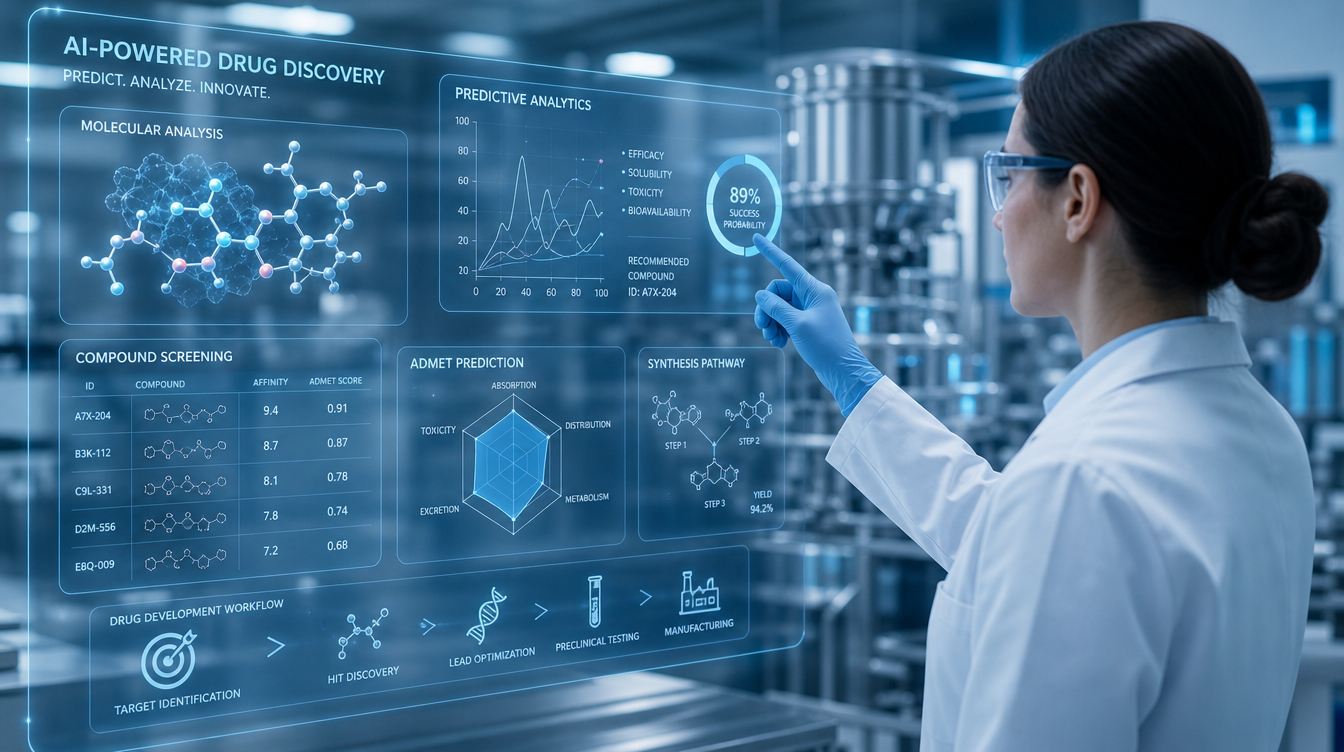
The future of drug development is being defined long before manufacturing begins. In a recent thought leadership article, Mr. Hari Kiran Chereddi, Founder, Managing Director & CEO of HRV Pharma, highlights how the pharmaceutical industry is shifting from capacity-driven models to intelligence-led decision-making.
For decades, success in pharma was measured by manufacturing scale, reactor capacity, production lines, and output volume. Today, that paradigm is rapidly changing. The decisions that determine a drug’s clinical, regulatory, and commercial success are increasingly made years before the first commercial batch is produced.
The Shift from Manufacturing to Decision Intelligence
Traditional pharma models prioritized manufacturing scale as the primary driver of value. However, in today’s complex global landscape, success depends on early-stage strategic decisions such as molecule selection, target market sequencing, regulatory pathways, and supply chain design.
This shift reflects a broader transformation from chemistry-led development to data-driven strategy.
The Role of Predictive Analytics
Advancements in predictive analytics are fundamentally changing how pharmaceutical companies approach early development stages.
- Simulation of solubility and bioavailability outcomes
- Forecasting regulatory risks and approval timelines
- Predicting patent expiry impact and market competition
- Evaluating supply chain vulnerabilities before execution
These capabilities enable companies to build more realistic, data-backed development pathways, reducing uncertainty and improving success rates.
Risk Has Moved Upstream
In the past, major risks emerged during manufacturing or post-commercialization. Today, risk assessment begins much earlier in the lifecycle.
Companies are now evaluating:
- Regulatory precedents before filing
- Inspection history of manufacturing partners
- Dependency on specific geographies or intermediates
- Commercial sustainability across global markets
This upstream shift in risk evaluation is redefining how portfolios are built and optimized.
From Static Models to Dynamic Decision-Making
Earlier, development decisions were often based on static spreadsheets and historical assumptions. Today, dynamic models simulate real-world scenarios capturing pricing pressures, competitive entry, physician behavior, and formulation differentiation.
This allows companies to continuously refine strategies rather than relying on fixed projections.
Implications for Pharma Companies
This transformation is redefining competitive advantage across the industry:
- Better molecule selection: Choosing the right assets early
- Faster time-to-market: Reduced delays through better planning
- Lower risk exposure: Early identification of regulatory and supply risks
- Improved capital efficiency: Investing in the right opportunities
India’s Strategic Role
For India, this shift is particularly significant. As a major supplier to global pharmaceutical markets, the ability to make smarter pre-manufacturing decisions directly impacts competitiveness.
A substantial share of global prescriptions relies on Indian manufacturing. However, the value created during molecule selection, regulatory strategy, and commercialization planning is now exceeding that generated during manufacturing alone.
The HRV Pharma Perspective
HRV Pharma’s virtual pharmaceutical model is aligned with this evolution. By integrating regulatory intelligence, market insights, and global manufacturing coordination, the company enables smarter decision-making at the earliest stages of development.
This approach ensures that development strategies are not only scientifically sound but also commercially viable and globally scalable.
Looking Ahead
Manufacturing will always remain a critical component of the pharmaceutical value chain, but it is no longer the starting point of success.
The companies that will define the next decade of pharma are those that make the best decisions before manufacturing begins, selecting the right molecules, targeting the right markets, and building resilient, data-driven strategies.
Source
Fortune India – Why the future of drug development begins before manufacturing
Frequently Asked Questions
Why is drug development shifting before manufacturing?
Because critical decisions such as molecule selection, regulatory strategy, and market positioning now determine success earlier in the lifecycle.
What role does predictive analytics play in pharma?
Predictive analytics helps simulate outcomes, assess risks, and optimize strategies before execution, improving overall success rates.
What does “risk moving upstream” mean?
It means risks are now evaluated during early development stages rather than during manufacturing or commercialization.
How does this impact pharmaceutical companies?
Companies can reduce risk, improve speed, and allocate capital more efficiently by making better early-stage decisions.
How is HRV Pharma adapting to this shift?
HRV Pharma uses a virtual model that integrates data, regulatory strategy, and global manufacturing to enable smarter early-stage decisions.