

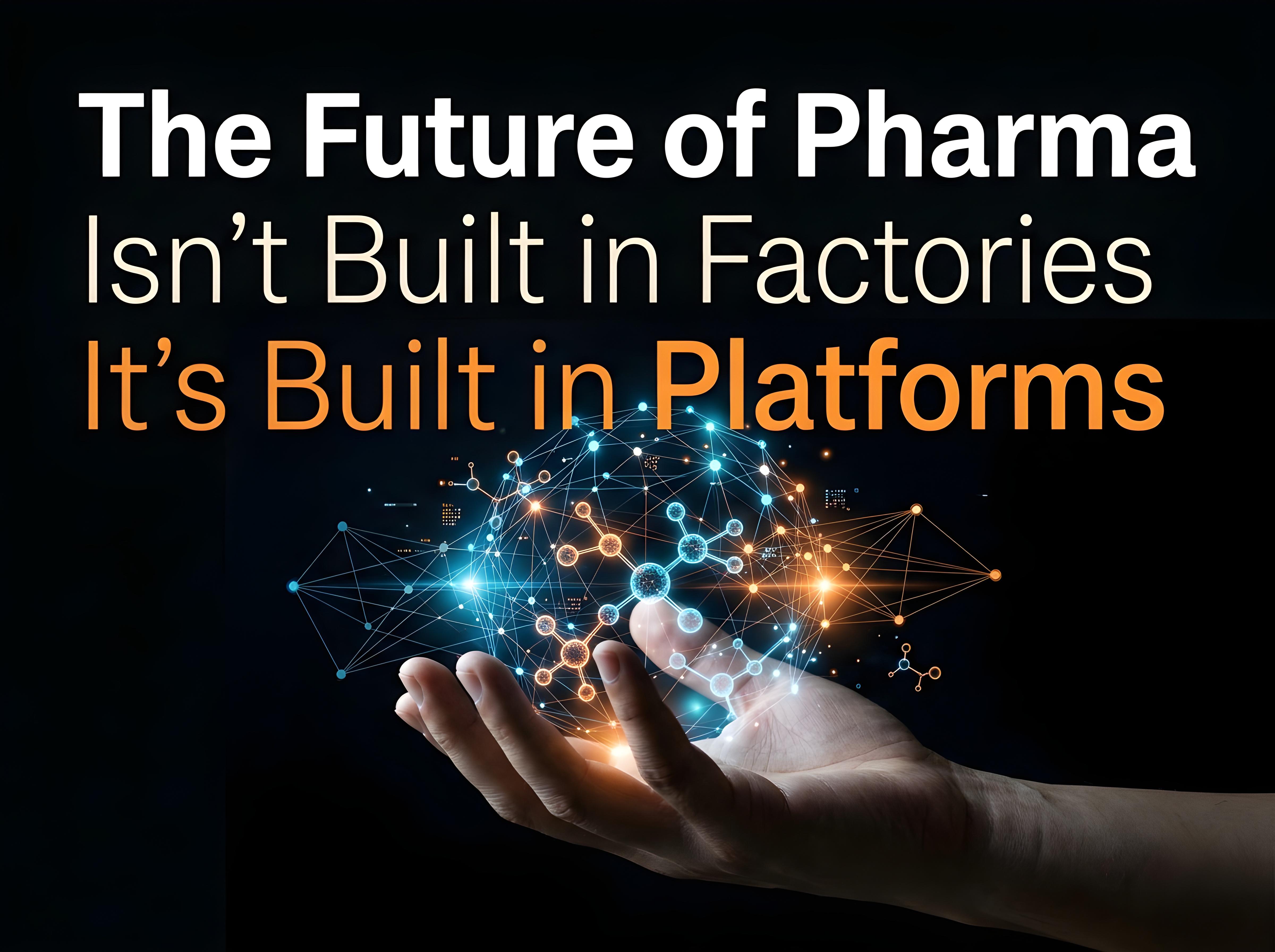
The pharmaceutical industry is undergoing a fundamental transformation - from factory-driven manufacturing to platform-based ecosystems. In a recent thought leadership article, Mr. Hari Kiran Chereddi, Managing Director & CEO of HRV Pharma & NHG Pharma, highlights how traditional models are being replaced by intelligent, network-driven systems.
For decades, pharma growth was driven by building factories, filing generic applications, and scaling high-volume production. However, this model is no longer delivering the same efficiency or flexibility in today’s increasingly complex and regulated environment.
The Shift from Factories to Platforms
The industry is moving away from isolated manufacturing units toward integrated platforms that connect development, regulatory compliance, and production across multiple partners.
Rather than focusing solely on physical infrastructure, platform models enable companies to coordinate capabilities across a distributed network—making supply chains more adaptive and responsive.
Why the Traditional Model Is Breaking Down
Several structural challenges are accelerating this shift:
- Increasing regulatory complexity: Compliance requirements continue to evolve, making it harder to manage quality across isolated facilities.
- Rising cost of non-compliance: Regulatory warnings and delays significantly impact timelines and profitability.
- Dependence on single geographies: Concentrated supply chains reduce flexibility and increase risk.
These factors are forcing pharmaceutical companies to rethink how they design and manage production systems.
The Rise of Platform Economics in Pharma
A platform in pharma is not just a digital layer- it is a coordinated system that integrates regulatory intelligence, manufacturing capabilities, and supply chain decision-making.
This model enables companies to:
- Identify the best manufacturing partner for each molecule
- Predict potential compliance risks and mitigate them early
- Optimize production across multiple geographies
- Accelerate time-to-market through coordinated execution
In this framework, the factory becomes one component of a larger network, rather than the center of the system.
Learning from Platform-Based Industries
This transformation mirrors changes seen in other industries, where platforms have replaced asset-heavy models. Instead of owning all infrastructure, leading companies focus on coordination, intelligence, and network efficiency.
In pharma, this translates into building systems that integrate data, compliance, and manufacturing rather than relying solely on physical assets.
Strategic Implications for Pharma Companies
The shift toward platform models is redefining competitive advantage in the industry:
- Speed: Faster development and execution through network coordination
- Flexibility: Ability to shift production across facilities
- Capital efficiency: Reduced reliance on heavy infrastructure investment
- Resilience: Stronger supply chain adaptability in volatile environments
The Role of Virtual Pharma Models
Emerging operating models, including HRV Pharma’s virtual pharmaceutical platform, are at the forefront of this transformation. By orchestrating a network of compliant manufacturing partners, these models enable scalable growth without traditional infrastructure constraints.
This approach allows companies to focus on innovation, regulatory strategy, and global market access while leveraging distributed manufacturing capabilities.
Looking Ahead
The next decade will not eliminate factories, but it will redefine their role. Value creation in pharma will increasingly come from platforms that integrate capabilities, rather than from standalone manufacturing assets.
As the industry evolves, the companies that succeed will be those that build intelligent, connected ecosystems, turning coordination and execution into their core strengths.
Source
Moneycontrol – Future of pharma might be platforms, not factories
Frequently Asked Questions
What does a platform-based pharma model mean?
A platform-based model integrates manufacturing, regulatory compliance, and supply chain coordination across a network of partners instead of relying on a single facility.
Why is pharma moving away from factory-driven models?
Increasing regulatory complexity, rising costs, and supply chain risks are making traditional factory-led models less efficient and less flexible.
How do platform models improve pharma operations?
They enable faster decision-making, better compliance management, optimized manufacturing allocation, and improved supply chain resilience.
What is HRV Pharma’s approach?
HRV Pharma uses a virtual pharma platform to coordinate global manufacturing, regulatory execution, and commercialization through an integrated network.
Will factories become obsolete?
No. Factories will remain essential, but their role will shift from central assets to components within a larger, coordinated platform ecosystem.