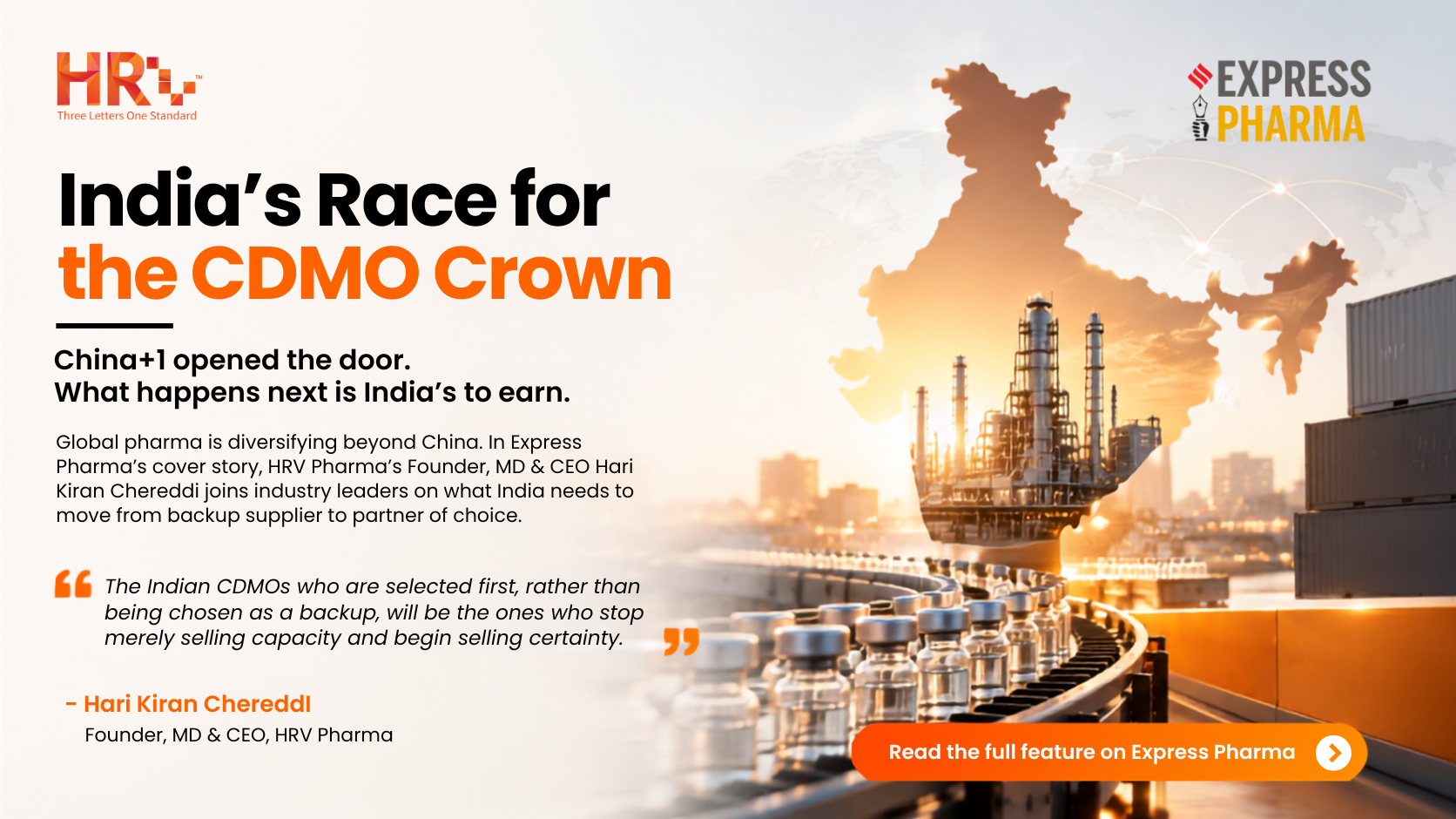


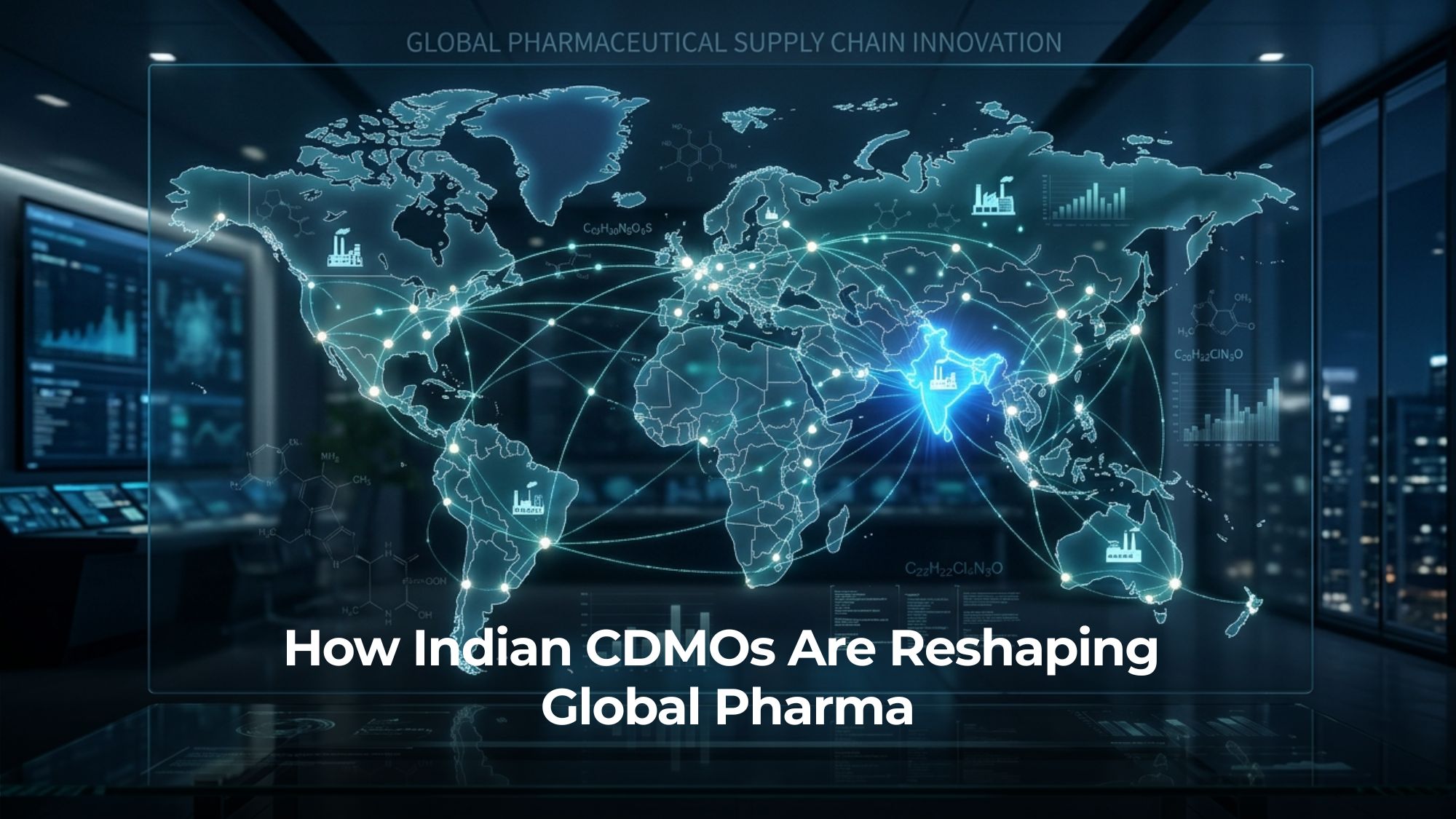
Global pharmaceutical supply chains are undergoing a structural transformation, from efficiency-driven models to resilience-focused networks. In a recent thought leadership article, our Managing Director and CEO, Mr. Hari Kiran Chereddi, highlights how Indian CDMOs are playing a pivotal role in reshaping global pharma from supply chain risk to strategic advantage.
For decades, pharmaceutical supply chains were built around cost efficiency, scale, and just-in-time sourcing. While effective, these models underestimated systemic fragility, an issue exposed during the COVID-19 pandemic and subsequent geopolitical and logistical disruptions.
From Efficiency to Resilience
What was once considered optimal efficiency, geographic concentration, and lean sourcing has now evolved into a key vulnerability. Today, global pharma companies are re-engineering supply chains with a focus on diversification, flexibility, and risk mitigation.
This shift is transforming supply chains into strategic assets rather than operational back-end systems.
The Rise of Indian CDMOs
Indian Contract Development and Manufacturing Organizations (CDMOs) are emerging as critical enablers of this transformation. No longer viewed as backup suppliers, they are becoming strategic partners in global pharmaceutical manufacturing.
Several structural strengths position India at the center of this shift:
- Large base of US FDA, EDQM, and WHO-GMP approved manufacturing facilities
- Proven track record across regulated markets, including the US and Europe
- Deep scientific talent pool in complex chemistry and high-potency APIs
- Integrated development-to-commercialization capabilities
A Market Expanding Rapidly
The global CDMO market is projected to grow from approximately USD 185 billion in 2024 to nearly USD 370 billion by 2034. Within this expansion, India is expected to significantly increase its share, driven by capability-led growth rather than just scale.
This marks a fundamental shift, from capacity-driven manufacturing to capability-driven partnerships.
China+1: From Strategy to Structural Shift
The widely adopted China+1 strategy reflects the need for diversified sourcing. However, it is no longer just a tactical shift; it is becoming a structural redesign of global supply chains.
India’s role in this transformation lies in providing redundancy, flexibility, and regulatory alignment across multiple markets.
Moving Up the Value Chain
Indian CDMOs are increasingly expanding beyond traditional generics into high-value and complex segments, including:
- Oncology and high-potency APIs
- Complex multi-step synthesis and hazardous chemistry
- Peptides and advanced small molecules
This evolution positions India as a contributor to innovation, not just manufacturing.
Turning Risk into Strategic Advantage
Pharmaceutical companies are now leveraging Indian CDMOs to transform supply chain risks into competitive advantages through:
- Resilience: Multi-region manufacturing strategies ensuring continuity
- Speed: Accelerated development and CMC timelines
- Capital Efficiency: Optimized cost structures enabling reinvestment into R&D
What Defines Leading CDMO Partners
As outsourcing accelerates, differentiation among CDMOs is increasingly defined by:
- Consistent regulatory compliance and inspection readiness
- Expertise in complex chemistry and high-value molecules
- Integrated development, manufacturing, and regulatory capabilities
- Strong data integrity and quality-first culture
- Transparent and reliable supply chain practices
The industry is clearly transitioning from transactional supplier relationships to strategic partnerships.
The Role of Virtual Pharma Models
New operating models, including HRV Pharma’s virtual pharmaceutical platform, are accelerating this shift. By integrating development, manufacturing, and regulatory execution across partner networks, these models enable flexibility without heavy capital investment.
This represents a new paradigm where coordination, integration, and execution define competitive advantage.
Looking Ahead
Pharmaceutical supply chains are being redefined in real time. What were once considered limitations, geographic concentration, cost pressures, and fixed capacity, are now being leveraged to build more dynamic and resilient networks.
India is at the heart of this transformation, evolving from a supporting player to a strategic hub in the global pharmaceutical value chain.
As the industry moves forward, the key question is no longer whether India should be part of supply chain strategies but how deeply it should be integrated.
Source
ET Pharma – From Supply Chain Risk to Supply Chain Advantage
Frequently Asked Questions
What is driving the transformation of pharma supply chains?
Global disruptions such as COVID-19, geopolitical tensions, and regulatory challenges have shifted focus from efficiency to resilience, diversification, and flexibility.
Why are Indian CDMOs becoming important globally?
India offers strong regulatory infrastructure, scientific expertise, cost efficiency, and integrated capabilities, making it a strategic partner for global pharma companies.
What is the China+1 strategy?
China+1 refers to diversifying manufacturing and sourcing beyond a single geography to reduce risk and improve supply chain resilience.
How do CDMOs create competitive advantage?
CDMOs enable faster development, reduce capital investment, and improve supply chain flexibility while maintaining regulatory compliance.
What is HRV Pharma’s role in this transformation?
HRV Pharma’s virtual pharma model integrates global manufacturing, regulatory execution, and commercialization to create flexible, scalable supply chain solutions.